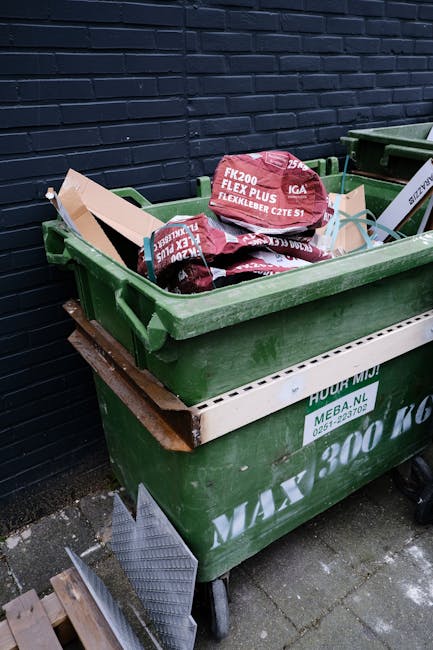
Skip permits and rubbish disposal rules in Islington N1
Posted on 18/08/2026
Skip permits and rubbish disposal rules in Islington N1: a practical local guide
If you are planning a clear-out, renovation, or a quick tidy-up in north London, the details can get messy fast. Skip permits and rubbish disposal rules in Islington N1 are exactly the sort of thing people only think about when a skip is already half-filled and parked outside the property. That is usually the wrong moment to start asking questions.
This guide walks through how permits, placement rules, disposal expectations, and better alternatives fit together in everyday life. You will get a plain-English explanation of when a skip makes sense, when it does not, and how to avoid the common mistakes that lead to delays, extra costs, or a neighbourhood complaint. Let's face it, nobody wants to be the person whose skip is blocking a pavement on a wet Tuesday morning.
For readers who want the wider context around waste services, it can also help to look at the broader services overview and the company's approach to licensing and compliance.

Why Skip permits and rubbish disposal rules in Islington N1 Matters
In a dense part of London like Islington N1, waste management is not just about getting rid of stuff. It is about access, safety, neighbours, pavement space, traffic flow, and keeping rubbish from becoming a nuisance. A skip that looks harmless on paper can create a real problem on a narrow street with parked cars, tight corners, and people walking past with prams, shopping bags, or bikes.
That is why permits and disposal rules matter. A skip is usually placed on a public highway only when the correct permission is in place, and disposal must be done in a way that avoids contamination, fly-tipping, and unsafe loading. Even for private land, you still need to think about what you are throwing away and how it will be handled. The rules are there to keep things orderly, but also to stop expensive mistakes later on.
There is another reason too: the wrong disposal choice can slow your project down. A builder waiting for a bin to be emptied, a landlord trying to clear a flat before new tenants move in, or a homeowner dealing with rubble after a bathroom refit all lose time when the waste plan is not thought through properly. In our experience, the tidy jobs are nearly always the ones that were planned early.
If you are weighing options for a home or business clear-out, the local guides on Upper Street house clearance and rubbish collection advice and avoiding hidden rubbish removal charges in Islington are useful next reads.
Expert summary: In Islington N1, the cleanest outcome usually comes from matching the waste type, the site access, and the disposal method before the job starts. That is the real shortcut.
How Skip permits and rubbish disposal rules in Islington N1 Works
The basic idea is simple: if a skip will sit on private ground, such as a driveway or a secured yard, you usually have more flexibility. If it will be placed on a public road or pavement, permit requirements and placement controls tend to come into play. That distinction matters more than most people expect.
A permit is not the only issue. The skip company may need to assess access, kerb space, visibility, and whether the street is suitable for a container. Some streets in Islington are compact, busy, or shared with residents who already struggle with parking. In those cases, even if a permit is possible, it may not be the smoothest option.
Disposal rules also depend on the waste itself. General mixed rubbish is one thing. Builders' rubble, soil, plasterboard, electrical items, fridges, and mattresses are another. Some materials should never be mixed casually because they need separate handling. That is where a service like builders waste disposal in Islington or white goods and appliance disposal becomes more suitable than a standard mixed skip.
For everyday household rubbish, a more flexible collection route may make more sense than leaving a skip outside for several days. Many residents choose domestic waste collection in Islington or local rubbish collection when access is awkward or the job is smaller than it first looked.
Here is the practical difference in one sentence: a skip is a static container for larger, longer jobs, while a collection service is often better for quicker clearance with less disruption. Simple, really. But easy to get wrong if you are in a hurry.
Key Benefits and Practical Advantages
When the permit or disposal plan is right, the benefits are easy to notice.
- Fewer delays: you are less likely to be stuck waiting because a container cannot be placed legally or safely.
- Better cost control: choosing the right disposal method helps avoid paying for space, time, or handling you do not need.
- Cleaner site conditions: rubbish stays contained instead of spreading across a hallway, front garden, or loading bay.
- Less stress with neighbours: a neat, compliant arrangement usually causes fewer complaints.
- Safer working environment: less loose waste means fewer trips, sharp edges, and blocked entrances.
There is also a more subtle benefit: better planning gives you room to separate useful items from true waste. A surprising amount of household and office material can be reused, donated, or recycled if it is sorted before disposal. If sustainability matters to you, the company's recycling and sustainability information is worth a look, especially for mixed clearances.
For business customers, the advantage is often operational. A shop refurb, office move, or post-event clean-up can carry on with less disruption if the waste method fits the schedule. That matters in places like Angel or Upper Street where foot traffic never really switches off.
Who This Is For and When It Makes Sense
This topic is relevant to a lot of people in N1, not just builders. If you are thinking, "Do I really need a skip for this?", you are already asking the right question.
- Homeowners doing a renovation, garden clear-up, or loft sort-out
- Landlords clearing a flat between tenancies
- Estate agents handling pre-sale tidy-ups and end-of-tenancy waste
- Businesses replacing fixtures, shelving, office furniture, or stockroom contents
- Contractors producing heavy construction or demolition waste
- Residents in flats who need a clearance method that works around restricted access
Skip permits and rubbish disposal rules in Islington N1 matter most when there is limited space, a shared entrance, controlled parking, or a time-sensitive job. If the waste is bulky but not massive, a direct collection service may be more practical than hiring a skip for a full day or longer.
A real-world example: a flat clear-out near Angel Station may sound small at first. Then you spot a broken wardrobe, two mattresses, old shelving, a carpet roll, and half a bathroom cupboard. That is when a simple bag-and-bin plan suddenly stops making sense.
For those situations, related guidance such as rubbish removal near Angel Station and common access problems for council flats can help you think through the access side before you book anything.
Step-by-Step Guidance
If you want to keep the process smooth, follow this sequence rather than guessing as you go.
- Identify the waste type. Work out whether it is household rubbish, mixed waste, builders' debris, furniture, appliances, garden waste, or office contents.
- Estimate the volume honestly. People often underestimate how much waste they have. One room can become two van loads before you know it.
- Check the placement location. Decide whether the container would sit on private land or the public highway. This is the permit turning point.
- Review access conditions. Look at stairwells, gate widths, loading points, parking limits, and the route from waste to collection point.
- Match the method to the job. Compare a skip, a pre-arranged collection, or a specialist clearance service.
- Sort restricted materials separately. Keep electricals, plasterboard, sharp items, and reusable goods away from the mixed pile where possible.
- Book early if timing matters. Permit-related jobs often need a bit more lead time than people expect.
- Keep records and confirmation. Save booking details, collection windows, and any instructions given by the waste provider.
That may sound straightforward. It is. But the tricky bit is often in the details, not the main idea. A small mistake, like blocking a shared path or mixing the wrong materials, can create avoidable friction.
If you are managing a bigger project, a focused service such as house clearance in Islington, office clearance, or loft clearance may be a neater fit than trying to self-manage the waste piecemeal.
Expert Tips for Better Results
Small choices make a big difference here. A few habits save a surprising amount of hassle.
- Plan for the access reality, not the ideal one. In Islington, real life includes parked cars, narrow curbs, residents coming and going, and the odd awkward lamp post right where you do not want it.
- Keep heavy material on the bottom. If you are loading a container yourself, this makes the load safer and usually easier to handle.
- Separate reusable items early. That old chair or desk might be better sent for reuse than placed in mixed waste.
- Use the right service for specialist items. Fridges, washing machines, and bulky furniture often benefit from dedicated handling.
- Ask about all-in pricing and what it includes. It sounds boring. It is not boring when a hidden charge appears later.
Another thing people forget: weather. A rainy day in London changes the feel of the whole job. Cardboard softens, bags split more easily, and access points get slippery. It is not dramatic, but it matters.
If you are trying to keep the process smooth and predictable, the article on book urgent same-day rubbish removal in Islington is a good reference point for tight timelines and last-minute jobs.
Common Mistakes to Avoid
Most problems in this area are surprisingly ordinary. That is the annoying part.
- Assuming a skip can go anywhere. A public-road placement is a different conversation from a private driveway.
- Overfilling the container. Waste that sits above the fill line can become unsafe and may not be collected.
- Mixing unsuitable materials. Some items need separate handling, and mixing them can create extra cost or refusal at collection.
- Leaving the booking too late. If permit arrangements are needed, you usually want a little breathing room.
- Ignoring access for neighbours and pedestrians. Shared entrances, narrow pavements, and stairwell bottlenecks are where trouble starts.
- Picking the wrong service level. A whole skip for a few bags is wasteful; a small van for a full property clearance may be unrealistic.
People also sometimes assume that "rubbish is rubbish," but that is not how disposal works in practice. A mattress, a radiator, a fridge, and a stack of office paper are all waste, yes, but they are not treated the same way.
To avoid the most common surprises, the guide on Islington council rules for large items and rubbish is a sensible companion read.
Tools, Resources and Recommendations
You do not need a pile of specialist tools, but a little preparation goes a long way.
- Measuring tape: useful for checking furniture, access routes, and container placement space
- Pen and note app: for listing what is going and what is staying
- Heavy-duty gloves: sensible for sorting, especially where sharp edges are involved
- Clear bags or boxes: helpful for separating recyclables, donations, and general rubbish
- Photos of the waste pile: handy when you need a quote based on actual volume
For service planning, the most practical place to start is usually the main waste removal in Islington page, because it helps you compare the type of job you have with the type of clearance needed. If your waste is mostly bulky household furniture, the dedicated furniture removal and furniture disposal options may be the more efficient route.
And if the job is commercial rather than domestic, commercial waste removal in Islington is usually a better fit than improvising with a general-purpose container.
Law, Compliance, Standards, or Best Practice
Waste disposal is one of those areas where best practice matters almost as much as the written rule. The exact permit process can vary by location and street conditions, so it is always wise to confirm the practical requirements before placing a skip on the highway. The same goes for waste type: the way material is sorted and transported affects whether it can be handled safely and lawfully.
Good compliance usually means:
- using a properly licensed waste carrier
- keeping waste contained and secure
- separating hazardous or specialist materials where required
- avoiding obstruction of public access
- making sure disposal routes are traceable and responsible
For residents and businesses alike, the safest approach is to use a provider that can explain what it will and will not take, how it handles different waste streams, and what happens if access changes on the day. That clarity is part of professional service, not a bonus.
In practice, compliance is also about being neighbourly. If a skip blocks a doorway or the pavement is left narrow enough to be awkward, even a technically "booked" arrangement can still cause problems. Best practice is what keeps the job civilised.
Options, Methods, or Comparison Table
Different waste jobs need different methods. Here is a straightforward comparison.
| Method | Best for | Pros | Trade-offs |
|---|---|---|---|
| Skip hire | Longer projects, bulky mixed waste, building work | Useful for ongoing loading, keeps waste on site | May need permit on public land, can take space, access issues matter |
| Man-and-van collection | Smaller to medium clearances, quick removals | Flexible, less street disruption, good for awkward access | May require pre-sorting and accurate volume estimate |
| Specialist item disposal | Appliances, furniture, white goods, heavy single items | Efficient for specific waste streams | Not ideal for broad mixed waste piles |
| Full property clearance | House, loft, office, or estate clear-outs | Most hands-off approach, good for bigger jobs | Usually more planning needed up front |
As a rule of thumb, if your job is mixed, bulky, and likely to grow over several days, a skip can be useful. If your job is compact, access is awkward, or you need everything removed in one visit, a collection service often feels easier. No need to make it harder than it has to be.
Case Study or Real-World Example
Here is a realistic example from the kind of work that comes up all the time in Islington N1.
A couple near Highbury decided to clear out a spare bedroom before selling their flat. At first, they thought a small skip outside the building would be the simplest option. Then they checked the access: a shared entrance, limited frontage, a narrow road, and several residents already using the same curb space. The skip was still possible, but it started looking like a bit of a headache.
Instead, they split the waste into furniture, mixed household items, and a few electrical pieces. The furniture went through a dedicated furniture clearance route, the electricals were separated, and the rest was collected in one visit. The result? Less time with waste sitting around, no need to leave a container on the street, and fewer awkward conversations with neighbours on the stairwell.
It sounds mundane, because it was. But mundane is good when you are trying to move house or prepare a property for sale. That is often the win: fewer moving parts, less uncertainty, fewer surprises.
For local property or sale-related planning, the nearby guides on Islington real estate deals and investing wisely in Islington property can also be useful for understanding why a clean, decluttered space matters beyond the waste itself.
Practical Checklist
Use this checklist before you book anything.
- Have I identified exactly what type of waste I have?
- Do I know whether the container would go on private land or a public road?
- Have I checked access for narrow paths, stairwells, gates, and parking?
- Have I separated items that need special handling?
- Do I know whether a skip, van collection, or full clearance is the better fit?
- Have I got photos or rough measurements of the waste pile?
- Have I allowed enough time for any permit or booking lead time?
- Have I thought about noise, neighbours, and timing?
- Do I understand what the price includes?
- Have I chosen a licensed, compliant waste provider?
If you can tick most of those off, you are already ahead of the curve. And honestly, that is where the stress drops away.
Conclusion
Skip permits and rubbish disposal rules in Islington N1 are not there to make life difficult. They exist because the area is busy, compact, and full of real-world constraints that affect how waste should be handled. Once you understand the difference between private and public placement, the importance of waste type, and the value of choosing the right disposal method, the whole process becomes a lot more manageable.
The best results usually come from thinking one step ahead: what needs removing, where it will sit, how it will be loaded, and whether a skip is truly the best tool for the job. That small bit of planning can save time, money, and quite a bit of irritation. If there is one thing to remember, it is this: the neatest waste job is usually the one that was planned before the first bag was carried outside.
Get a free quote today and see how much you can save.
When the job is handled properly, you get your space back, your project moves on, and the street stays a bit calmer. That is a good outcome, and a reassuring one too.